Sooty Mould (Mold) On Citrus: What It Is And How To Treat It

If you’ve spotted a black, sooty-looking coating on your citrus leaves, it can be alarming. But the good news is that sooty mould (or mold) is rarely a problem in itself. It’s actually a sign of something else going on with your tree. Learn what sooty mould is, what causes it and why treating the real cause is usually all you need to do to clear it up.

*Disclosure: This post contains affiliate links. We may be paid a commission if you use these links to make a purchase. As an Amazon Associate we earn from qualifying purchases.
What is sooty mould?
Sooty mould is a type of fungus that grows on citrus leaves, stems and fruit. (Here in Australia we spell it mould, so we’ll use that term, but it’s also spelled mold in the US). It gets its name because it looks just like a layer of black soot has settled over the plant. In light cases, you might just see scattered black spots or blotches. With a heavier build-up, whole leaves or fruit can look like they’ve been dusted in dark ash.

Unlike many plant diseases, sooty mould doesn’t actually infect your citrus tree. It’s a surface-dwelling fungus that sits on top of the leaf, stem or fruit rather than growing into the plant tissue. That’s why it’s often easy to wipe or rub off with your finger, leaving a lighter mark underneath.
What causes sooty mould on citrus
Sooty mould doesn’t appear out of nowhere. It grows on honeydew, the sweet, sticky substance secreted by sap-sucking insects as they feed on your citrus tree. The honeydew coats the leaves and sooty mould fungus colonises this sugary residue.
This means sooty mould is really a symptom of a pest problem, not a problem on its own. If you’ve noticed sooty mould on your citrus tree, there’s a good chance one of these honeydew-producing pests is behind it:
- Citrus aphids: tiny, pear-shaped insects that cluster on new growth and flower buds
- Citrus scale: small, immobile insects that attach to stems, leaves and fruit
- Mealybugs: unarmoured scale pests that feed on citrus leaves and stems
- Citrus whitefly: tiny white flying insects, often found on the underside of leaves
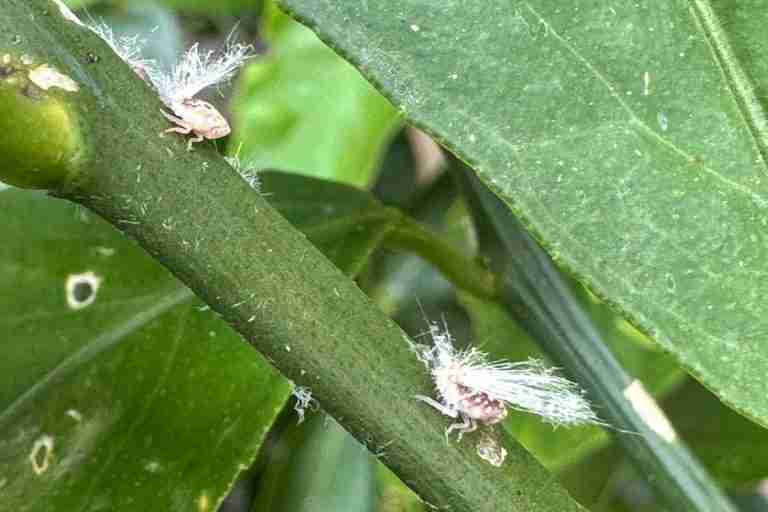
- Passionvine hoppers: fluffy nymphs and lacey-winged adults found on stems and new growth
Quite often you might see signs of sooty mould before you see the pest behind it. Sooty mould has been a warning sign for me of white flies on my potted mandarin. It’s also turned up after aphids have been on my orange tree.

You may also notice ants on your citrus tree alongside the sooty mould. Ants are attracted to the sweet honeydew and will often protect or ‘farm’ the pests producing it to keep their food source going. If you see ants, it’s a good clue that one of these sap-sucking pests is active on your tree.
Is sooty mould harmful to my citrus tree?
In small amounts, sooty mould is mostly a cosmetic issue. A few black spots on a leaf here and there won’t do much harm. It does look unsightly though.
However if the underlying pest problem isn’t dealt with, the mould can build up and cover large areas of the leaf surface. This can block sunlight and interfere with photosynthesis, which may affect the health and vigour of your tree over time. It can even impact flowering and fruit production. Heavy sooty mould can also spread to citrus fruits themselves.
It’s worth remembering that the sooty mould itself isn’t attacking your tree. The real risk comes from the pest infestation producing the honeydew in the first place, so that’s what deserves your attention.
How to treat sooty mould
The good news is that treating sooty mould is usually pretty simple: treat the pest, and the mould takes care of itself.
- Identify the pest. Use the comparison table below to work out whether you’re dealing with aphids, scale, mealybug, whitefly or passionvine hoppers (or occasionally a mix of these).
- Treat the pest. The links below include treatment options for citrus pests that cause sooty mould, including physical removal, encouraging beneficial insects, and non-toxic soap sprays.
- Let the mould wear off, or wash it away. Once the pest is under control and honeydew is no longer being produced, sooty mould will gradually weather off the leaves on its own. If you’d like to speed things along on an established tree, you can gently wipe or hose off the mould once the pest problem is resolved.

You don’t need a fungicide to treat sooty mould. Because it’s only growing on the surface of the honeydew rather than infecting the plant, fungicide sprays won’t address the real cause and aren’t necessary.
Which pest do you have?
Since the treatment for sooty mould really comes down to treating the pest causing it, it helps to work out which one you’re dealing with. Here’s a quick comparison to help you narrow it down:
| Pest | Size & appearance | Where to look | Other tell-tale signs |
|---|---|---|---|
 Aphids | Tiny (1–2mm), soft-bodied, pear-shaped; often black or brown on citrus | New growth, flower buds, undersides of young leaves | Curled or wilting new leaves; white shed skins (exoskeletons) nearby |
 Scale | Small (1–5mm), flat or domed bumps; brown, grey or white; don’t move once settled | Stems, leaf undersides, sometimes fruit | Bumps that scrape off with a fingernail; sticky residue on leaves and anything beneath the tree |
 Mealybug | Small (3–5mm), oval, covered in white, waxy powder or ‘fluff’ | Leaf joints, stem crevices, underside of leaves, sometimes around fruit stems | Clusters look like tiny bits of cotton wool; slow-moving |
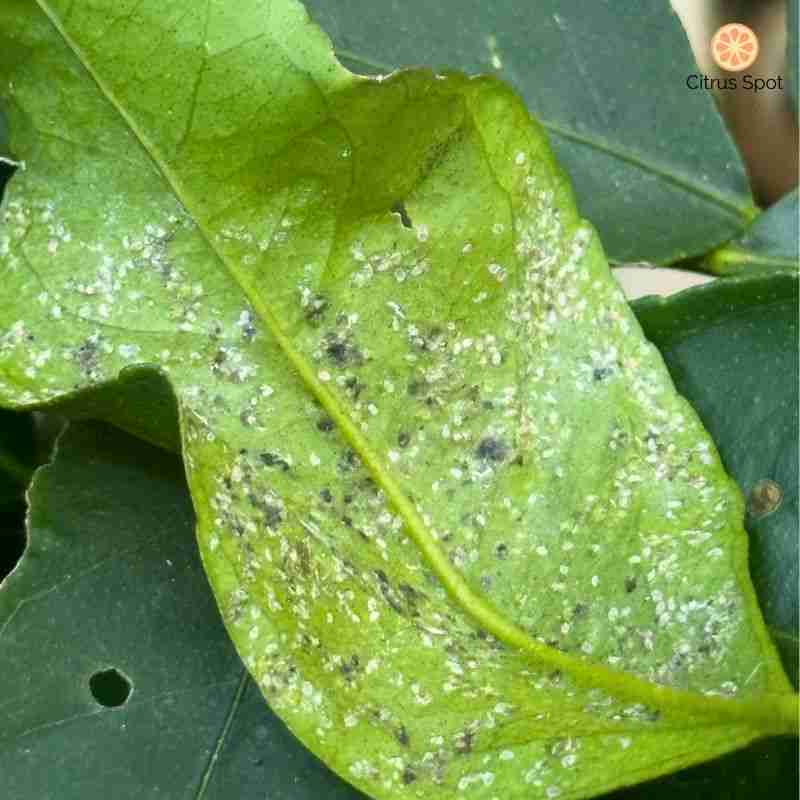 Whitefly | Tiny (1–2mm), moth-like, white-winged adults; pale nymphs | Underside of leaves | Cloud of tiny white insects flying up when you shake the tree |
 Passionvine hoppers | Nymphs 5mm with white ‘fluffy’ filaments; adults 6–7mm with brown lacey wings | Stems and new growth, often in groups | Nymphs look like tufts of white hair; adults jump or fly off when disturbed |
Preventing sooty mould
As sooty mould follows on from a pest infestation, the best prevention is the same as preventing the pests themselves:
- Inspect regularly. Check new growth and the underside of leaves every couple of weeks during warmer months, when most of these pests are more active.
- Watch for ants. Ants on your citrus tree are often the first clue that aphids, scale or another honeydew-producing pest is active.
- Encourage beneficial insects. Ladybirds (ladybugs), lacewings, predatory wasps and other beneficial insects help keep sap-sucking pests in check naturally, so avoid unnecessary insecticide use.
- Keep your tree healthy. Well-fed, well-watered citrus trees are generally more resilient and less prone to pest problems in the first place.

Catching a pest problem early means you can treat it before sooty mould has a chance to build up, keeping your citrus tree looking (and growing) its best.
More about citrus pests and growing citrus at home
Find out more about the pests that cause sooty mould, including citrus aphids, citrus scale, citrus whitefly and passionvine hoppers, or other common citrus pests like gall wasps. For tips on growing citrus, find out about growing a Tahitian lime tree in a pot or explore some of the best lemon trees to grow if you love to cook.
And we’d love you to subscribe for more handy tips on growing and enjoying your own lemons, limes, oranges and other citrus at home.
Free goodies!
Subscribe and receive our citrus themed weekly planner and to do list